
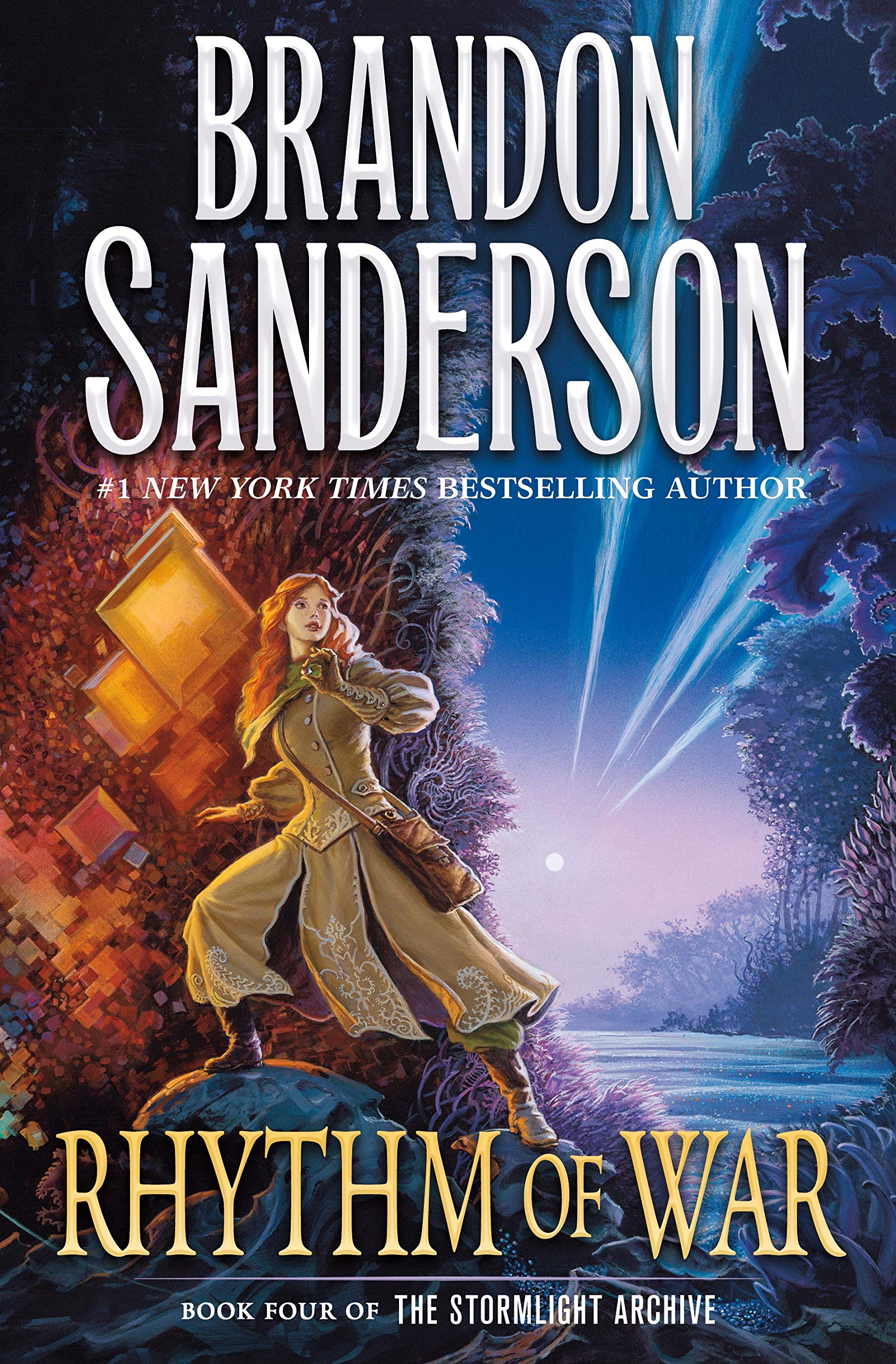
Rhythm of War (9781429952040)
33. Understanding
by Sanderson, BrandonThe chapter opens with a reflection on Odium’s destructive ambition to eliminate all other Shards, setting a dark and urgent tone. Kaladin, the protagonist, grapples with the difference between knowing and feeling, a theme central to his character. He takes on the challenge of helping patients in a sanitarium, focusing on those with battle-induced trauma, following his father Lirin’s advice to start small. Kaladin’s approach contrasts with the ardents’ generalized treatments, as he seeks to understand and address the specific struggles of each individual.
Kaladin’s efforts center on six men with similar symptoms, whom he releases from confinement and guides toward mutual support. By fostering open discussions on a sunlit balcony, he creates a space for shared healing. His mother observes the positive impact, noting how the men uplift rather than drag each other down—a stark contrast to the ardents’ warnings. Kaladin attributes this success to the power of collective strength, drawing parallels to his past experiences with bridge crews, where unity was key to survival.
The narrative delves into Kaladin’s internal conflict as he reflects on his traumatic past, which he shields from his mother to spare her pain. Though she claims to understand his struggles, Kaladin believes true understanding can only come from those who have endured similar suffering. This emotional distance highlights the isolation of trauma, even among loved ones. The chapter emphasizes the transformative power of shared experience, as the men begin to heal by realizing they are not alone in their pain.
Ultimately, the chapter underscores the importance of empathy and community in overcoming mental anguish. Kaladin’s method—rooted in connection and sunlight—offers a glimmer of hope, though he acknowledges it is only a beginning. The chapter closes on a poignant note, balancing the fragility of progress with the resilience found in mutual understanding. Kaladin’s journey reflects both his growth as a healer and the lingering scars of his own unspoken battles.
FAQs
1. How does Kaladin’s approach to understanding differ from his father’s, and how does this influence his treatment method for the sanitarium patients?
Answer:
Kaladin distinguishes between knowing something intellectually and feeling it experientially, unlike his father Lirin who treats knowledge and feeling as synonymous. This difference leads Kaladin to adopt a hands-on approach with the sanitarium patients—he doesn’t just rely on medical theories but actively tests methods to address their trauma. By grouping patients with similar symptoms (battle fatigue, nightmares, melancholy) and facilitating peer discussions in sunlight, he creates a communal healing environment. This contrasts with traditional ardent practices of isolation, demonstrating his belief that shared experiences and mutual support (“the squad is stronger than the individual”) can counteract despair (pp. 428–430).2. Why does Kaladin believe that peer support works better for trauma recovery than solitary treatment, and what evidence does he cite?
Answer:
Kaladin argues that isolation in dark sanitariums exacerbates despair, as patients reinforce each other’s hopelessness—a phenomenon he witnessed among slaves in similar conditions. In contrast, structured group discussions in sunlight allow patients to verbalize their pain and realize others share their struggles, creating a sense of solidarity. He observes that even quiet participants engage when hearing relatable stories, proving that “feeling” understood (not just knowing it) is transformative. His mother notes the unexpected success of this method compared to documented failures of isolated treatment (pp. 429–430). Kaladin’s own trauma as a slave likely informs this insight.3. Analyze the symbolic significance of sunlight in Kaladin’s therapeutic approach. How does it connect to broader themes in the chapter?
Answer:
Sunlight symbolizes hope and clarity in contrast to the literal and metaphorical darkness of trauma. Kaladin deliberately moves patients from the sanitarium’s shadows to a sunlit balcony, physically and emotionally “showing them sunlight again” (p. 430). This mirrors the chapter’s theme of understanding through experience—just as light reveals truth, shared stories illuminate paths to healing. The darkness represents both mental illness and societal neglect (e.g., ardents’ ineffective methods), while sunlight reflects Kaladin’s Radiant identity—”broken but reforged”—and his belief in collective resilience.4. How does Kaladin’s interaction with his mother reveal his emotional growth and lingering struggles?
Answer:
When his mother touches his arm sympathetically, Kaladin turns away, recognizing her inability to truly understand his trauma (p. 429). He shields her from his darkest experiences (e.g., slavery), acknowledging that while she and Lirin are sympathetic, only fellow sufferers can offer true comprehension. This shows maturity in accepting limits to familial support but also unresolved guilt—he views his past self as “dead,” implying ongoing self-division. His growth lies in channeling this pain to help others, yet his reluctance to burden his mother hints at unhealed wounds.5. Evaluate the chapter’s exploration of Odium’s goal in relation to Kaladin’s story. How do these threads connect thematically?
Answer:
The opening line about Odium’s goal to “Splinter” other Shards parallels Kaladin’s mission to prevent emotional fracturing in his patients. Both narratives address preservation versus destruction: Odium seeks to dominate by eradicating others’ power, while Kaladin empowers patients to resist despair’s fragmentation. The chapter suggests true understanding—whether of cosmic threats or mental health—requires proactive resistance against forces that isolate and weaken. Kaladin’s methods counter Odium’s philosophy by proving unity (not annihilation) fosters strength.
Quotes
1. “We must assume that Odium has realized this, and is seeking a singular, terrible goal: the destruction—and somehow Splintering or otherwise making impotent—of all Shards other than him.”
This opening line establishes the cosmic stakes of the narrative, revealing Odium’s grand destructive ambition against other Shards. It frames the chapter’s exploration of personal struggles within a larger metaphysical conflict.
2. “Listening to descriptions from books was never good enough for him. He had to try something to understand it.”
This reveals Kaladin’s fundamental character trait - his need for experiential learning. The quote underscores the chapter’s theme of practical understanding versus theoretical knowledge, particularly in healing.
3. “The squad is stronger than the individual. You simply need to get them pointed in the right direction. Get them to lift the bridge together…”
Kaladin applies his military experience to mental health treatment, introducing the powerful metaphor of collective healing. This represents a key turning point in his therapeutic approach with the patients.
4. “It changes something to be able to speak to others about your pain. It helps to have others who actually understand.”
This concise statement captures the chapter’s central thesis about the therapeutic power of shared experience and genuine empathy. It contrasts with the following realization that even loving family members can’t fully understand certain pains.
5. “Realizing that no matter how isolated you thought you were, no matter how often your brain told you terrible things, there were others who understood.”
This powerful conclusion summarizes the healing process Kaladin facilitates, emphasizing the transformative recognition of shared humanity in overcoming mental health struggles. It provides hope while acknowledging the ongoing nature of recovery.