
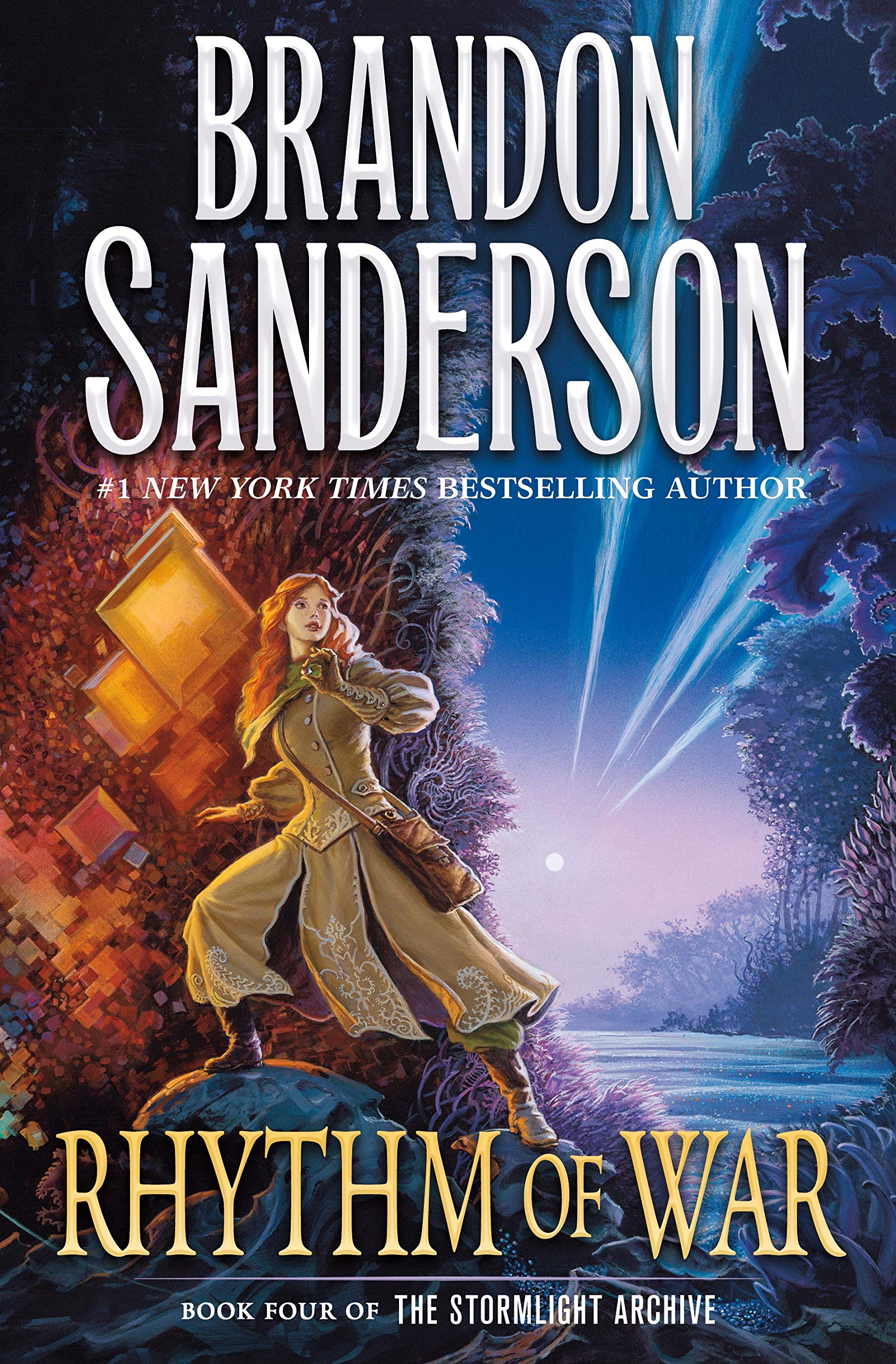
Rhythm of War (9781429952040)
1. Calluses
by Sanderson, BrandonThe chapter opens with an epigraph from Navani Kholin, discussing the mechanics of attracting spren by using gemstones and familiar elements. This sets a thematic tone for the chapter, which then shifts to focus on Lirin, a surgeon calmly treating a child for scurvy amidst a refugee crisis. Lirin’s training helps him remain composed as he assists the child’s mother, offering a token for juice and promising to help locate her missing children. The scene highlights the dire conditions in Hearthstone, where refugees from Herdaz crowd the town, living under makeshift tarps and facing scrutiny from armed parshmen, now called “singers.”
Lirin observes the overwhelmed town, noting the fog-shrouded streets and the influx of refugees, many fleeing the destruction of Herdaz after a year of conflict. The town’s resources are stretched thin, with stormshelters inadequate for long-term housing. Lirin’s role as a medic forces him to triage the refugees, inspecting each for health issues while navigating the political tensions under the new parshmen-led regime. The chapter underscores the cyclical nature of power and violence, as Lirin reflects on how little has changed despite the shift in leadership—ordinary people still suffer, and he remains tasked with healing their wounds.
The narrative follows Lirin as he treats a one-armed Alethi man traumatized by brigands who killed his wife. Lirin’s clinical detachment is evident as he directs the man to a tent for mental health support, though he internally notes the man’s hollow stare. His pragmatic approach is challenged when Abiajan, the parshwoman citylady, questions his seemingly emotionless condolences. Lirin defends his demeanor as a necessary professional boundary, revealing the emotional toll of his work. The interaction hints at their shared history, as Abiajan recalls Lirin setting her broken arm in childhood, though her current role and experiences remain enigmatic.
The chapter closes with a sense of unresolved tension, as Lirin continues his work amid the chaos, anticipating the arrival of a figure responsible for much of the suffering. The juxtaposition of Lirin’s stoicism and the refugees’ despair paints a grim picture of a world in upheaval, where survival hinges on resilience and detachment. The epigraph’s theme of attracting spren through familiarity mirrors Lirin’s own reliance on routine and training to navigate the unfamiliar and brutal realities of war and displacement.
FAQs
1. What are the two main purposes of Lirin inspecting each refugee entering Hearthstone, and how do these purposes reflect his character?
Answer:
Lirin inspects each refugee for two primary reasons: first, to identify and treat medical conditions (such as scurvy or wounds) as seen when he checks the child’s gums and the Alethi man’s amputated arm. Second, he uses this process to intercept individuals who might need psychological or specialized care, like directing the traumatized Alethi man to tent fourteen for suicide watch. These actions reflect Lirin’s disciplined compassion—he maintains emotional detachment to avoid being overwhelmed (“compassion of a stone”), yet systematically addresses both physical and mental suffering. His background as a surgeon informs this balanced approach, prioritizing practical aid over emotional display.2. Analyze how the setting of Hearthstone and its refugee crisis mirrors broader societal conflicts in the chapter.
Answer:
Hearthstone’s overcrowded, fog-shrouded state—with makeshift tarps and overwhelmed storm shelters—symbolizes the collapse of social order following the Everstorm and Herdaz’s invasion. The refugee lines, guarded by armed parshmen (“singers”), highlight ongoing power struggles; former oppressed groups now enforce control, while displaced Alethi and Herdazians suffer. Lirin’s observation that “the same old conflicts consume the parshmen as easily as they had the Alethi brightlords” underscores cyclical violence and oppression. The setting thus becomes a microcosm of war’s fallout, where political shifts (e.g., parshmen gaining literacy and weapons) fail to alleviate civilian suffering.3. How does the epigraph about spren and gemstones metaphorically relate to Lirin’s interactions with refugees?
Answer:
The epigraph emphasizes attracting spren by understanding their preferences (e.g., a flamespren needing fire). Similarly, Lirin “calms” traumatized refugees by offering what they need most: medical care, resources (like the carapace chit for juice), or targeted compassion. His methodical approach—like identifying shock in the Alethi man—mirrors “fabrial mechanics” in the epigraph; he assesses individual needs to provide stability. Both contexts require knowledge and tailored responses, whether manipulating spren with gemstones or addressing human suffering with precise interventions.4. Evaluate Abiajan’s critique of Lirin’s “compassion of a stone.” Is her perspective justified?
Answer:
Abiajan criticizes Lirin’s detached demeanor when he repeatedly says, “I’m sorry for your loss,” interpreting it as insincerity. However, Lirin’s explanation—that surgeons must avoid being “overwhelmed by their pain”—justifies his approach. His actions (e.g., discreetly directing refugees to care) prove his compassion is operational, not performative. Abiajan’s critique reflects her parshman perspective, where emotional expression may hold cultural weight, but Lirin’s method ensures sustained aid. Thus, her judgment is partially valid (empathy matters) but overlooks the necessity of his professional detachment in crisis scenarios.5. What foreshadowing exists in the chapter regarding the hidden “man who authored much of this suffering”?
Answer:
The cryptic mention of a hidden man—”the reason Lirin was so nervous today”—hints at a significant antagonist among the refugees. This figure’s implied connection to Herdaz’s destruction (“authored much of this suffering”) suggests he may be a Fused or collaborator. Lirin’s heightened alertness during inspections foreshadows a confrontation, while the refugees’ trauma (e.g., the Alethi man’s wife taken by “brigands”) indirectly reflects this man’s impact. The tension between Lirin’s humanitarian role and this looming threat sets up future conflict between healing and systemic violence.
Quotes
1. “First, you must get a spren to approach. The type of gemstone is relevant; some spren are naturally more intrigued by certain gemstones.”
This epigraph introduces a key magical mechanic in the world, establishing the relationship between spren and gemstones that underlies fabrial technology. It sets the tone for a chapter exploring systems and connections.
2. “People who got a taste of power wanted more, then sought it with the sword. Ordinary people bled, and Lirin was left to stitch them up.”
This encapsulates Lirin’s cynical worldview about power dynamics and war’s cyclical nature. The surgeon’s perspective highlights how political struggles always ultimately harm common people, regardless of who holds power.
3. “I feel, Brightness, but I must be careful not to be overwhelmed by their pain. It’s one of the first rules of becoming a surgeon.”
This reveals Lirin’s professional philosophy and emotional discipline. The quote demonstrates how he maintains effectiveness amidst constant suffering, while also hinting at his emotional detachment that others perceive as coldness.
4. “Behind them, the morning fog obscured Hearthstone. It seemed to be a group of dark, shadowy lumps. Like tumors.”
This vivid simile reflects both the physical and metaphorical state of the town under occupation. The medical imagery (“tumors”) reinforces Lirin’s surgeon’s perspective while conveying the creeping decay affecting the community.