
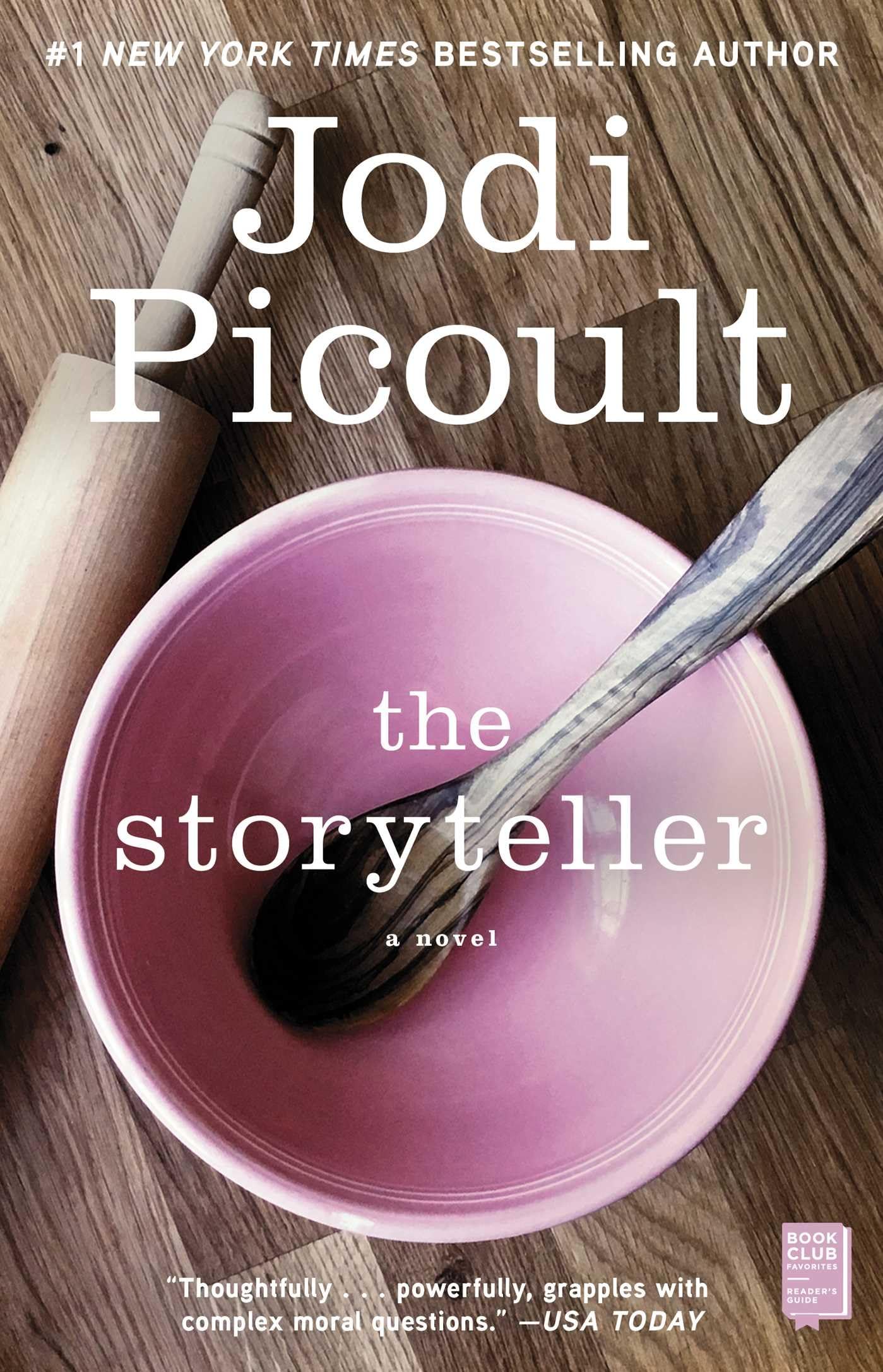
The Storyteller
In The Storyteller, Jodi Picoult weaves a haunting multi-generational narrative that confronts the legacy of the Holocaust and the complex nature of forgiveness. The story follows Sage Singer, a reclusive baker grappling with grief, who befriends an elderly man named Josef Weber—a beloved small-town figure and Holocaust survivor. When Josef reveals a shocking secret from his past and makes an unthinkable request, Sage is forced to question morality, justice, and whether some sins are beyond redemption.
Intertwined with Sage’s modern-day dilemma is the harrowing story of her grandmother Minka, a Polish Jew who survived Auschwitz. Picoult’s meticulous research and dual-timeline storytelling create a powerful exploration of guilt, survival, and the stories we tell to survive—and to heal.
With its morally ambiguous characters and emotionally charged dilemmas, The Storyteller challenges readers to ask: Can a monster ever truly atone?
Description
- Jodi Picoult’s “The Storyteller” explores themes of guilt, forgiveness, and the enduring impact of history through interwoven narratives. Sage Singer, a reclusive baker, befriends Josef Weber, a beloved elderly man who reveals a dark secret: he was a Nazi SS officer. He requests Sage’s help to die, forcing her to confront her own Jewish heritage and family trauma. The novel shifts between Sage’s moral dilemma and her grandmother’s Holocaust survival story, examining how stories shape identity and justice. Picoult’s signature ethical complexity and historical research create a poignant meditation on redemption and the power of narrative.
FAQs
- What is “The Storyteller” by Jodi Picoult about?
- • “The Storyteller” follows Sage, a baker who attends a grief counseling group, where members share their losses and memories. The opening scene introduces themes of grief, guilt, and personal trauma as Sage interacts with other group members, including Mrs. Dombrowski, who brings her late husband’s urn to the session. The story explores complex emotions surrounding loss and the ways people cope with it.
- Who is the protagonist of “The Storyteller”?
- • The protagonist is Sage, a young woman who has been attending a grief support group for nearly three years. She carries deep emotional scars, both literal (a facial scar) and figurative, stemming from her mother’s death. Sage is a baker, known for her butterscotch pecan muffins, and struggles with feelings of guilt and punishment related to her grief.
- What themes are explored in “The Storyteller”?
- • The book delves into themes of grief, loss, guilt, and healing. It examines how different people process trauma—whether through humor, denial, or confrontation—and highlights the idea that loss extends beyond death (e.g., dementia, broken relationships). The narrative also touches on memory and how objects (like an urn or a wedding ring) symbolize connections to the past.
- What makes “The Storyteller” unique compared to other Jodi Picoult novels?
- • While Picoult is known for tackling moral dilemmas and emotional conflicts, “The Storyteller” stands out for its raw exploration of grief through an unconventional support group setting. The inclusion of dark humor (e.g., Stuart’s bronze death mask) and diverse forms of loss (Alzheimer’s, cremation debates) adds layers to its portrayal of human resilience.
- Is “The Storyteller” part of a series?
- • No, “The Storyteller” is a standalone novel by Jodi Picoult. However, fans of her other works (e.g., “My Sister’s Keeper,” “Small Great Things”) will recognize her signature style of blending personal drama with ethical questions.
- What tone can readers expect from “The Storyteller”?
- • The tone is poignant and introspective, with moments of dark humor and tension. The grief group’s interactions range from tender (Ethel’s TV remote) to unsettling (the urn debate), creating a balance between heartbreak and catharsis. Sage’s internal struggles lend the story an intimate, emotional weight.
Quotes
- “Loss is more than just death, and grief is the gray shape-shifter of emotion.” — Jodi Picoult, The Storyteller
- “While most people come for therapy, I came for punishment.” — Jodi Picoult, The Storyteller
- “He’s not a something, he’s a someone.” — Jodi Picoult, The Storyteller (Mrs. Dombrowski defending her late husband’s urn)
- “You can lose your head, you can lose your heart, you can lose your mind.” — Jodi Picoult, The Storyteller
- “I stand frozen, ducking my head so that my hair covers the left side of my face, like I usually do.” — Jodi Picoult, The Storyteller (Sage’s reflection on her scar and vulnerability)
- Chapter 1: Sage 1 2,111 Words
- Chapter 2: Sage 2 2,565 Words
- Chapter 3: eo 1 2,209 Words
- Chapter 4: Sage 3 2,093 Words
- Chapter 5: Josef 1 2,846 Words
- Chapter 6: Sage 4 2,757 Words
- Chapter 7: Josef 2 2,197 Words
- Chapter 8: Sage 5 2,319 Words
- Chapter 9: Sage 6 2,360 Words
- Chapter 10: eo 2 2,343 Words
- Chapter 11: Minka 1 2,414 Words
- Chapter 12: Minka 2 2,481 Words
- Chapter 13: Sage 7 2,102 Words
- Chapter 14: eo 3 2,340 Words
- Chapter 15: Sage 8 1,784 Words
- Chapter 16: eo 4 2,214 Words
- Chapter 17: Sage 9 2,519 Words
-
Never Let Me Go: In Never Let Me Go, Kazuo Ishiguro weaves a haunting and introspective tale set in an alternate-reality 1990s England, where Kathy…
-
The Chrysalids: In The Chrysalids, John Wyndham crafts a chilling post-apocalyptic world where genetic purity is enforced with religious fervor.…
-
The Giver of Stars: Set in the rugged mountains of 1930s Kentucky, The Giver of Stars follows Alice Wright, a spirited Englishwoman who escapes her…
-
The Children of Men: In The Children of Men, P.D. James crafts a haunting dystopian vision set in 2021, where humanity faces extinction after decades of…
-
The Hunger Games: In The Hunger Games, Katniss Everdeen, a 16-year-old girl from the impoverished District 12, volunteers to take her younger sister’s…
-
The Death Cure: In The Death Cure, the harrowing conclusion to the Maze Runner trilogy, Thomas and his friends escape WICKED’s…
-
Brave New World: In Brave New World, Aldous Huxley crafts a chilling vision of a dystopian future where society is engineered for stability and…
-
Gregor and the Curse of the Warmbloods: In Gregor and the Curse of the Warmbloods, Gregor returns to the Underland on a desperate mission: a deadly plague called the…
-
Gregor and the Marks of Secret: In Gregor and the Marks of Secret, Gregor returns to the Underland for a mission that begins as a rescue—and spirals into a chilling…
-
Gregor and the Code of Claw: In the epic conclusion to the Underland Chronicles, Gregor faces his most harrowing challenge yet as the Underland teeters on…