
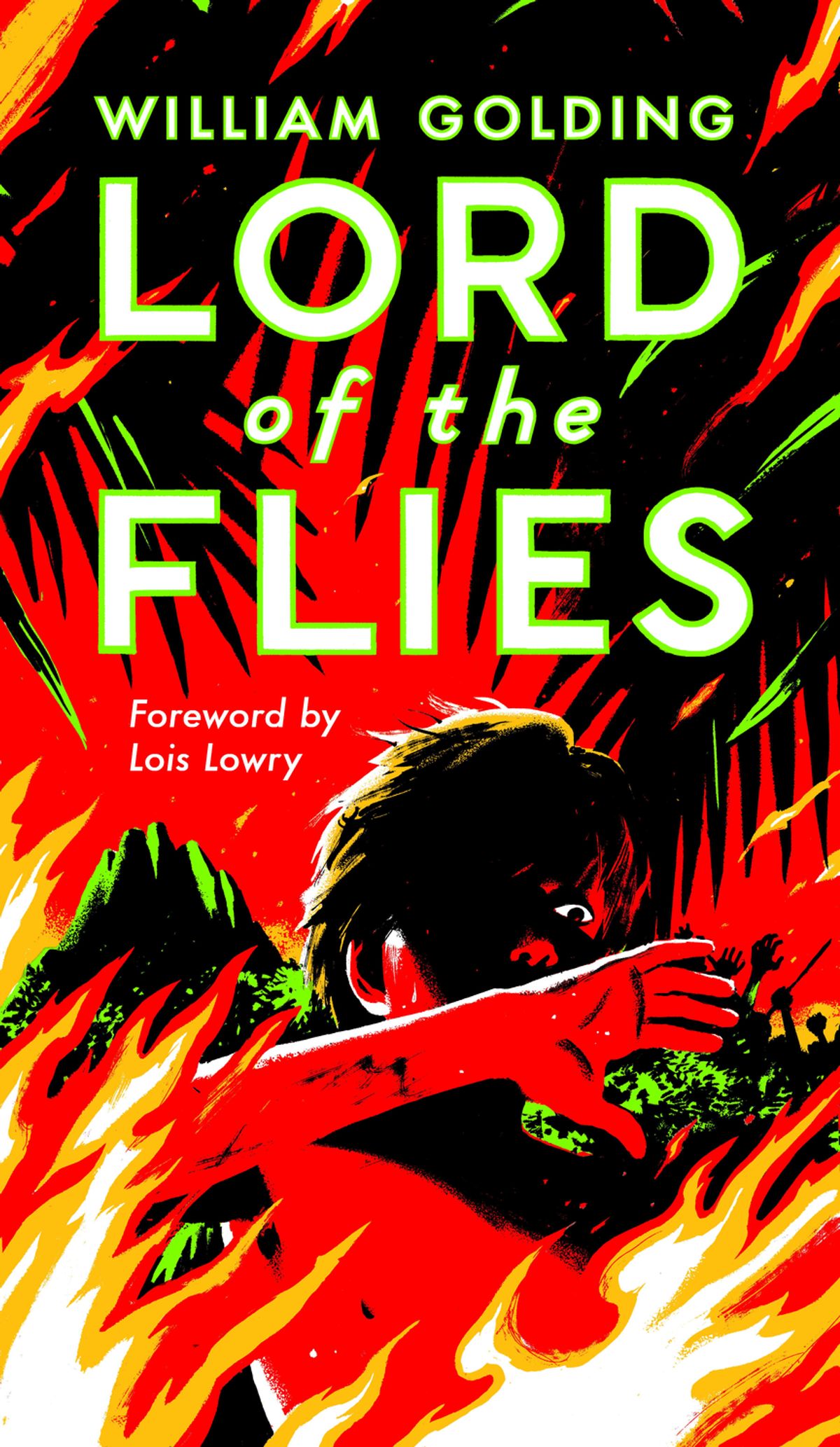
Lord of the Flies
Lord of the Flies, by William Golding, follows a group of British boys stranded on a deserted island after a plane crash. As they attempt to govern themselves, their societal structures collapse, leading to a descent into savagery and violence. The novel explores themes of human nature, the loss of innocence, and the inherent capacity for evil when civilization is removed.
ord of the Flies is a classic allegorical novel that explores the dark side of human nature. When a group of British schoolboys become stranded on a deserted island, they attempt to govern themselves—only for their efforts to spiral into chaos and savagery. Through this gripping tale, Golding examines the fragility of civilization, the lure of power, and the primal instincts that lie beneath the surface of human behavior.
Description
- Lord of the Flies, by William Golding, follows a group of British boys stranded on a deserted island after a plane crash. As they attempt to govern themselves, their societal structures collapse, leading to a descent into savagery and violence. The novel explores themes of human nature, the loss of innocence, and the inherent capacity for evil when civilization is removed.
FAQs
- What is “Lord of the Flies” about?
- • “Lord of the Flies” is a 1954 debut novel by William Golding that tells the story of a group of British schoolboys stranded on an uninhabited island after a plane crash. The boys attempt to govern themselves, but their efforts lead to chaos and savagery as their primitive instincts emerge.
- Who are the main characters in the novel?
- • The novel features key characters such as Ralph, who is elected leader; Piggy, the intellectual counselor; Jack, who eventually forms his own tribe; and Simon, a thoughtful boy whose death is a pivotal moment in the story.
- What are the major themes explored in “Lord of the Flies”?
- • The novel explores themes such as human nature, the conflict between civilization and savagery, morality, leadership, and the inherent evil within humanity. It raises questions about whether people are fundamentally good or evil.
- What does the “Lord of the Flies” symbolize?
- • The “Lord of the Flies” symbolizes the dark, primal instincts and the capacity for evil that exist within all humans. It represents the descent into savagery and loss of innocence experienced by the boys on the island.
- How has “Lord of the Flies” influenced literature?
- • Published long before the popularity of dystopian fiction, “Lord of the Flies” helped introduce the dystopian genre. It remains a classic work studied for its profound commentary on human nature and society.
- Is “Lord of the Flies” suitable for all readers?
- • The novel deals with mature themes, including violence and moral complexity. It is widely studied in educational settings and is recommended for readers who can engage thoughtfully with its challenging content.
- What is the significance of the conch in the story?
- • The conch shell is a symbol of order, authority, and civilization. It is used by the boys to call meetings and establish a sense of governance, reflecting their initial attempts to maintain social structure.
- Does the novel have a hopeful or pessimistic outlook on humanity?
- • William Golding’s perspective in the novel is generally pessimistic, suggesting that humanity is doomed to succumb to greed, cruelty, and violence, with goodness being fragile and often overwhelmed by darker impulses.
- Has “Lord of the Flies” been adapted into other media?
- • While not detailed in the search results, “Lord of the Flies” has been adapted into several films and stage productions, underscoring its lasting impact and relevance.
- Where can I find study guides or educational resources for “Lord of the Flies”?
- • Various study guides and educational resources are available online, including those from SparkNotes, CliffsNotes, Faber, and GradeSaver, offering summaries, analyses, and discussion questions to help readers understand the novel deeply.
Quotes
- “Maybe there is a beast… maybe it’s only us.” — William Golding, Lord of the Flies
- “Ralph wept for the end of innocence, the darkness of man’s heart, and the fall through the air of the true, wise friend called Piggy.” — William Golding, Lord of the Flies
- “His mind was crowded with memories; memories of the knowledge that had come to them when they closed in on the struggling pig, knowledge that they had outwitted a living thing, imposed their will upon it, taken away its life like a long satisfying drink.” — William Golding, Lord of the Flies
- “This head is for the beast. It’s a gift.” — William Golding, Lord of the Flies
- “He knelt among the shadows and felt his isolation bitterly. They were savages it was true; but they were human.” — William Golding, Lord of the Flies
- “The thing is – fear can’t hurt you any more than a dream.” — William Golding, Lord of the Flies (implied thematic insight)
- “The journey of life is like a man riding a bicycle. We know he got on the bicycle and started to move. We know that at some point he will stop and get off.” — William Golding
- “Maybe what’s in a book is not what an author thought he put into it, it’s what the reader gets out of it.” — William Golding
- CHAPTER ONE 2,281 Words
- CHAPTER TWO 2,303 Words
- CHAPTER THREE 2,264 Words
- CHAPTER FOUR 2,169 Words
- CHAPTER FIVE 2,536 Words
- CHAPTER SIX 2,091 Words
- CHAPTER SEVEN 2,202 Words
- CHAPTER EIGHT 2,016 Words
- CHAPTER NINE 2,306 Words
- CHAPTER TEN 2,477 Words
- CHAPTER ELEVEN 1,910 Words
- CHAPTER TWELVE 2,385 Words
-
Never Let Me Go: In Never Let Me Go, Kazuo Ishiguro weaves a haunting and introspective tale set in an alternate-reality 1990s England, where Kathy…
-
The Chrysalids: In The Chrysalids, John Wyndham crafts a chilling post-apocalyptic world where genetic purity is enforced with religious fervor.…
-
The Giver of Stars: Set in the rugged mountains of 1930s Kentucky, The Giver of Stars follows Alice Wright, a spirited Englishwoman who escapes her…
-
The Children of Men: In The Children of Men, P.D. James crafts a haunting dystopian vision set in 2021, where humanity faces extinction after decades of…
-
The Hunger Games: In The Hunger Games, Katniss Everdeen, a 16-year-old girl from the impoverished District 12, volunteers to take her younger sister’s…
-
The Death Cure: In The Death Cure, the harrowing conclusion to the Maze Runner trilogy, Thomas and his friends escape WICKED’s…
-
Brave New World: In Brave New World, Aldous Huxley crafts a chilling vision of a dystopian future where society is engineered for stability and…
-
Gregor and the Curse of the Warmbloods: In Gregor and the Curse of the Warmbloods, Gregor returns to the Underland on a desperate mission: a deadly plague called the…
-
Gregor and the Marks of Secret: In Gregor and the Marks of Secret, Gregor returns to the Underland for a mission that begins as a rescue—and spirals into a chilling…
-
Gregor and the Code of Claw: In the epic conclusion to the Underland Chronicles, Gregor faces his most harrowing challenge yet as the Underland teeters on…