
435 Results with the "Biography" genre
Adventure Fiction (1164)
Business & Finance (1)
Children's Literature (124)
Comics (6)
Culture (51)
Drama (123)
Dystopian (29)
Fable (86)
Fantasy (1132)
Fantasy (203)
Fiction (1010)
Finance (1)
Gothic Fiction (12)
Historical Fiction (615)
History (122)
Horror (56)
Lifestyle (36)
Literary (404)
Literary Fiction (207)
Memoir (113)
Mystery (422)
Non-fiction (87)
Novel (549)
Paranormal Fiction (96)
Philosophical (182)
Philosophy (45)
Poetry (249)
Political Fiction (14)
Politics (42)
Practical (32)
Psychological (4)
Psychological Thriller (108)
Relationship (6)
Romance Novel (716)
Romantic Melodrama (14)
Satire (91)
Science (46)
Science Fiction (345)
Self-help (68)
Society (65)
Society (2)
Spiritual Growth (1)
story (2)
Thriller (704)
True Crime (56)
view (11)
Women's Fiction (2)
Young Adult (233)
-
Chapter
Smoke and Cheers
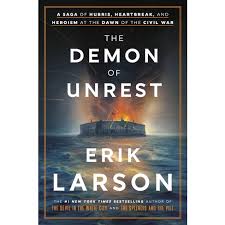 Smoke and Cheers lingered in the atmosphere at Fort Sumter, where an air of tension and unease prevailed. Captain Doubleday vividly described the fort’s damp, dark, and unfinished state, with only fifteen of the planned one hundred and twenty guns mounted, signaling the incomplete nature of the fortress. Despite its impressive design, intended to safeguard the area from external threats, much of the fort remained under construction. The cluttered interiors, filled with debris, made daily life difficult…
-
554.9 K • Ongoing
-
-
Chapter
Blood and Dishonor
Blood and Dishonor unfolded in Washington on December 27, 1860, as former Assistant Secretary of State William Henry Trescot met with Senators Jefferson Davis of Mississippi and R.M.T. Hunter of Virginia to discuss urgent matters. The three rushed to the White House to brief President Buchanan, who appeared visibly anxious. Trescot observed Buchanan’s nervousness during the meeting, especially when Buchanan casually mentioned the consul in Liverpool, prompting Davis to steer the conversation toward more…-
554.9 K • Ongoing
-
-
Chapter
Turmoil
Turmoil in Charleston began on December 27, 1860, when Major Anderson took control of Fort Sumter, prompting Governor Francis W. Pickens to act swiftly. Despite the largely ceremonial nature of the governorship, Pickens disregarded objections from the state legislature and ordered the South Carolina militia to seize all remaining federal properties in Charleston Harbor. The first target was Castle Pinckney, which was overtaken by around 150 militia members who scaled the fort’s walls to find it nearly…-
554.9 K • Ongoing
-
-
Chapter
Ominous Doings
Ominous Doings began to unfold as South Carolina’s preparations for war became increasingly evident between December 28 and 31, 1860. Governor Pickens called upon local planters to construct gun batteries along vital locations such as the Santee River and Winyah Bay, urging them to defend their land with the same patriotic fervor as their Revolutionary War ancestors. On December 28, he took a significant step by prohibiting the shipment of arms to Fort Sumter, although mail delivery was still permitted,…-
554.9 K • Ongoing
-
-
Chapter
The Real Danger
The Real Danger is vividly depicted in this chapter, as the United States faces an escalating crisis with Abraham Lincoln on the verge of taking office. The tension surrounding the nation intensifies, particularly with the presence of Anderson at Fort Sumter, signaling the growing unrest in the South. As Lincoln prepares to step into a divided and volatile nation, his frustrations mount due to the political vacuum left by the outgoing President Buchanan, who fails to take any decisive action in the face of…-
554.9 K • Ongoing
-
-
Chapter
Dorothea’s Warning
Dorothea’s Warning began on a January Saturday in 1861 when Dorothea Dix arrived at the Philadelphia office of Samuel M. Felton, Sr., the president of the Philadelphia, Wilmington, and Baltimore Railroad. While Dix’s original mission was to advocate for humane treatment in asylums, she brought a far more alarming piece of information with her. Having traveled through the South, she shared her troubling discoveries, revealing the growing political unrest and the secessionist movement. Felton, who had…-
554.9 K • Ongoing
-
-
Chapter
Crisis
Crisis unfolded as Edmund Ruffin embarked on a critical journey from his plantation near Gainesville, Florida, to Tallahassee to attend the state secession convention in early January 1861. During his travels, Ruffin was made aware of Major Anderson’s actions at Fort Sumter, which hinted at the potential for imminent conflict. This news fueled Ruffin’s belief that the war could hasten the secession decisions within the convention. Despite Florida's hesitance, Ruffin strongly advocated for swift action,…-
554.9 K • Ongoing
-
-
Chapter
Crossing the Bar
Crossing the Bar, the Star of the West encountered surprisingly clear weather on January 8 as it made its way toward its destination. However, the officer in charge, Lieutenant Woods, was unaware that the mission had been canceled, and he distributed guns and ammunition to the troops, preparing them for action. As the ship approached Charleston around midnight, Captain John McGowan ordered all lights to be extinguished, aiming to prevent the ship from being detected. Despite the darkness, enhanced by the…-
554.9 K • Ongoing
-
-
Chapter
Under Fire
Under Fire, the Star of the West found itself in a dire situation as it approached Fort Sumter, coming under fire from a hidden battery positioned on the shoreline. Captain McGowan, stationed aboard the ship, meticulously documented the dangerous circumstances, noting the way cannonballs ricocheted off the vessel's hull. One shot narrowly missed the pilot-house, while another struck the side of the ship, intensifying the growing threat to the vessel. Given the ship's large size and lack of experienced…-
554.9 K • Ongoing
-
-
Chapter
The True Enemy
The True Enemy emerges in the early days of the Civil War, highlighted by Mississippi's decision to secede from the Union on January 9, 1861. Following in South Carolina's footsteps, Mississippi's secession convention unanimously voted to leave, driven by the belief that slavery was essential to their way of life. The delegates saw the institution of slavery as crucial for their economy, with its preservation seen as a moral and economic necessity. In their declaration of secession, they emphasized a sharp…-
554.9 K • Ongoing
-
- Previous 1 … 23 24 25 … 44 Next