
45 Results with the "Philosophy" genre
Adventure Fiction (1164)
Biography (435)
Business & Finance (1)
Children's Literature (124)
Comics (6)
Culture (51)
Drama (123)
Dystopian (29)
Fable (86)
Fantasy (1132)
Fantasy (203)
Fiction (1010)
Finance (1)
Gothic Fiction (12)
Historical Fiction (615)
History (122)
Horror (56)
Lifestyle (36)
Literary (404)
Literary Fiction (207)
Memoir (113)
Mystery (422)
Non-fiction (87)
Novel (549)
Paranormal Fiction (96)
Philosophical (182)
Poetry (249)
Political Fiction (14)
Politics (42)
Practical (32)
Psychological (4)
Psychological Thriller (108)
Relationship (6)
Romance Novel (716)
Romantic Melodrama (14)
Satire (91)
Science (46)
Science Fiction (345)
Self-help (68)
Society (65)
Society (2)
Spiritual Growth (1)
story (2)
Thriller (704)
True Crime (56)
view (11)
Women's Fiction (2)
Young Adult (233)
-
Chapter
Nowhere and Nothing
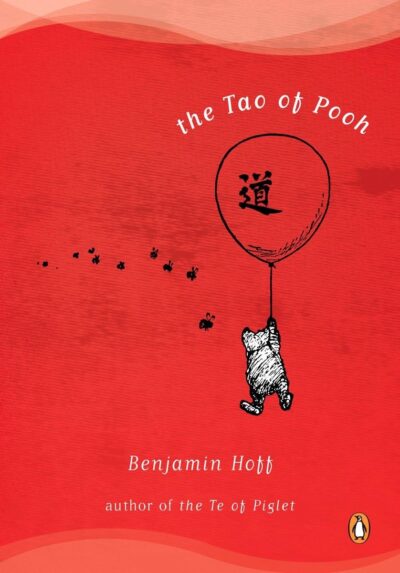 The chapter opens with a whimsical dialogue between Pooh and Christopher Robin, where they embark on a journey to "Nowhere." This playful exploration introduces the concept of doing nothing, which Christopher Robin describes as a state of going along without effort or disturbance, simply listening and not bothering with plans or worries. The scene sets a tone of philosophical lightness, emphasizing the value of passive awareness and the importance of embracing the present moment. Through this interaction,…
-
28.4 K • Ongoing
-
-
Chapter
The Now of Pooh
The chapter "The Now of Pooh" explores the significance of inner wisdom and intuition over mere intellectual cleverness. It begins with a poetic depiction of a small Bear wandering through the forest, serving as a metaphor for human life and decision-making. The narrative questions the value placed on the intellect, suggesting that over-reliance on the brain and external knowledge can lead us astray. Instead, it emphasizes listening to the inner voice that guides us intuitively, highlighting that true…-
28.4 K • Ongoing
-
-
Chapter
BACKWORD
The chapter opens with a playful dialogue between a narrator and Pooh, referencing the "Tao of Pooh," which symbolizes a philosophical approach rooted in simplicity and naturalness. The conversation introduces the idea of understanding the Tao not through complex explanations but through an intuitive, almost musical, expression. Pooh’s innocent response highlights the theme that profound wisdom can often be conveyed in simple, gentle ways, emphasizing that true understanding of the Tao lies beyond…-
28.4 K • Ongoing
-
-
 Chapter 12 - The Paris of our Grandparents opens with a nostalgic journey through a city whose charm has shifted with time, filtered through the memories of a woman who witnessed its golden afternoons and political storms. Her recollections are not merely sentimental—they serve as a bridge between generations, showing how a city both molds and is molded by its people. Walking alongside her, one senses how deeply woven the past remains in Paris’s bones. The boulevards, once quiet avenues for carriage…
-
151.7 K • Ongoing
-
-
Chapter
Chapter 2 — Domestic Despots
Chapter 2 - Domestic Despots explores the strange but familiar reality where dogs, rather than humans, appear to be in charge of the household. Within these homes, the owners are not masters but servants—fetching, feeding, and fussing at the slightest whim of a pawed commander. The dog’s comfort becomes paramount, its presence dictating where one sits, how loudly one speaks, and whether one travels at all. Vacations are shortened or skipped altogether, dinner menus are altered, and furniture becomes…-
151.7 K • Ongoing
-
-
Chapter 3 - Cyrano, Rostand, Coquelin begins with a reflection on how true brilliance can withstand flawed translation, much like fine wine still satisfying even in a cracked glass. When Cyrano de Bergerac crossed into English, its wit, charm, and emotional depth refused to be dulled. Rostand’s voice remained intact, thanks in part to Richard Mansfield’s resolve to keep the production honest to the original. Despite the translator’s limitations, the play retained its soul—an achievement owed not…
-
151.7 K • Ongoing
-
-
Chapter
Chapter 4 — Machine-made Men
Chapter 4 - Machine-made Men opens with a moment both humorous and frustrating: a personal-looking letter turns out to be nothing more than a printed pitch for suspenders and disposable collars. That small deception sparks a larger reflection on how daily life has been taken over by a flood of inventions, most of them unnecessary. These gadgets, born from a culture addicted to novelty, promise efficiency but deliver only confusion. Instead of simplifying life, they overcomplicate it with moving parts,…-
151.7 K • Ongoing
-
-
Chapter
Chapter 5 — Parnassus
Chapter 5 - Parnassus begins with a youthful memory—an encounter with the formidable Sainte-Beuve, one of France’s sharpest literary minds. The narrator recalls stepping into his study on rue Montparnasse, where modest furnishings belied the intellectual firepower of the man within. That early meeting left a quiet but permanent impression. Over time, as the narrator’s own understanding of literature deepened, so too did the value of that moment. The recollection matures into respect, shaped by later…-
151.7 K • Ongoing
-
-
Chapter
Chapter 6 — Modern Architecture
Chapter 6 - Modern Architecture begins with the imagined awe of a traveler first glimpsing New York’s skyline at twilight—a moment filled with wild allure and grand silhouettes. Yet that same skyline, when viewed in the stark light of day, transforms into a display of disjointed ambition and architectural confusion. Towers rise without rhyme or rhythm, each clamoring for attention, none offering unity. Where cities of the past presented a visual dialogue of shared ideals, this cityscape resembles a…-
151.7 K • Ongoing
-
-
Chapter 7 - Worldly Color-Blindness explores the subtle yet destructive effect of social misjudgment in hospitality, using the metaphor of literal color-blindness to reveal the consequences of emotional and cultural dullness. The chapter begins by contrasting physical impairments—like tone-deafness or visual deficiencies—with a far more common but less discussed issue: a lack of social discernment. In music or painting, some can overcome these limitations through technique or sheer will. But in…
-
151.7 K • Ongoing
-
- Previous 1 2 3 4 5 Next
