
LovelyMay
Stories
93
Chapters
1,516
Words
6.7 M
Comments
0
Reading
23 d, 5 h
-
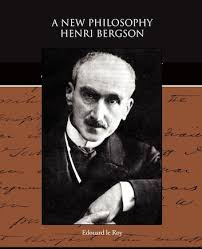 Chapter VI opens by challenging one of the most entrenched views in classical philosophy: that perception is internal and subjective. Henri Bergson reverses this assumption, asserting that perception arises at the intersection between subject and object. Rather than treating it as something confined within the observer, he emphasizes its outward-directed nature. According to this view, what we perceive is not an internal reconstruction but a direct connection to reality. This changes the entire framework…
-
57.6 K • Ongoing
-
-
Chapter VII begins with a bold challenge to one of modern philosophy’s most influential traditions. Henri Bergson, in his evolving vision of thought and life, steps away from the rigid contours drawn by thinkers like Kant. Where Kant enclosed reason within the bounds of structure and critique, Bergson sees such confinement as inadequate for understanding the living, breathing nature of thought. Rather than treating knowledge as a construct examined through static methods, he asks us to view it as part of…
-
57.6 K • Ongoing
-
-
Chapter VIII draws readers deeper into the evolving vision of Henri Bergson, where reason is no longer limited to logic alone. Instead, two distinct types of order—geometric and vital—are laid side by side, each revealing a different face of reality. Geometric order, with its straight lines and symmetry, offers a world of prediction and control. But this view, while useful in science and mathematics, cannot fully account for life’s complexity. Vital order, by contrast, is fluid, expressive, and…
-
57.6 K • Ongoing
-
-
In this index, Henri Bergson’s thought reveals not just a shift in philosophical method, but a deeper challenge to how existence itself is interpreted. His work moves beyond traditional structures of logic and categorization, advocating instead for a fluid approach rooted in intuition. While conventional philosophy seeks permanence in form and language, Bergson encourages thinkers to embrace change as the essence of life. His philosophy does not merely complement science—it confronts it. The rigid…
-
57.6 K • Ongoing
-
-
 Introduction to Aucassin and Nicolete begins not with lofty claims, but with quiet distinction. This poetic work, unlike many literary relics from the same era, has endured across centuries without losing its charm or originality. Blending prose with verse, it introduces a narrative form called the cante-fable, which doesn’t merely tell a story but performs it. Where most medieval texts lean toward morality tales or courtly grandeur, this piece feels more personal, intimate, and occasionally ironic. It…
-
12.1 K • Ongoing
-
-
The Song-Story of Aucassin and Nicolete ends not in tragedy but in fulfillment, with love triumphing after trials that tested its depth. Nicolete, having endured separation and hardship, takes it upon herself to prepare for a reunion not just with words but with grace and presence. She bathes, rests, and seeks out healers and herbalists, those wise in the secret arts of roots and oils. With their help, she creates a salve, one touched by tradition and healing lore, which makes her skin gleam with renewed…
-
12.1 K • Ongoing
-
-
In this notes "THE BLENDING"--of alternate prose and verse--"is not unknown in various countries." Thus in Dr. Steere's Swahili Tales (London, 1870), p. vii. we read: "It is a constant characteristic of popular native tales to have a sort of burden, which all join in singing. Frequently the skeleton of the story seems to be contained in these snatches of singing, which the story-teller connects by an extemporized account of the intervening history . . . Almost all these stories had sung parts, and of some…
-
12.1 K • Ongoing
-
-
 Chapter X begins with a sense of quiet resolve as the protagonist journeys deeper into Martian territory, drawn by the mystery of its uncharted wilderness. His curiosity, tempered by the need to understand this world, pushes him forward through vivid landscapes unlike anything seen on Earth. Vegetation pulses with strange colors and movements, almost sentient in its reactions to the environment. Some plants shimmer with iridescent leaves, while others retract or hiss when disturbed, making it clear that…
-
79.4 K • Ongoing
-
-
Chapter XI brings a shift in mood as Gulliver’s quest to find Heru takes him into unfamiliar and perilous territory. His departure is marked by an undertone of sadness despite a playful farewell with his companions. Alone in a sea canoe, he relies on a meager stock of cakes and water, unsure of the exact direction but certain of his intent. As the Martian current tugs him northward, he fails to notice he’s bypassing the intended route, eventually veering into a place entirely unlike the familiar warmth…
-
79.4 K • Ongoing
-
-
Chapter XII begins with a haunting stillness that blankets the icy Martian landscape. Gulliver, stranded in this frozen terrain, struggles to survive the biting cold by building a modest fire, unaware that his small flame will awaken more than just warmth. Nearby, encased in a sheet of ancient ice, rests a towering figure clad in regal grey, a circlet of gold bearing strange markings fixed around his head. Though motionless, the figure evokes a presence of immense dignity, as if royal authority had been…
-
79.4 K • Ongoing
-
- Previous 1 … 68 69 70 … 152 Next