
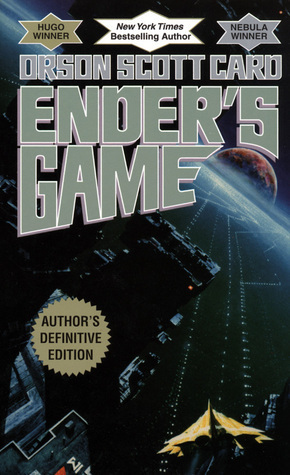
1986 — Orson Scott Card — Ender’s Game
Chapter 13: — Valentine
by Game, Ender’sThe chapter reveals the surprising discovery that the influential political personas Demosthenes and Locke are actually two young siblings, Valentine (12) and Peter (14) Wiggin. Authorities tracking their online activities uncover their true identities but debate whether to expose them. Despite initial disbelief, they conclude the children are acting independently, with no adult manipulation. Colonel Graff, familiar with their abilities from Battle School, confirms their intellectual prowess but notes the irony that Valentine, the empathetic and pacifistic sister, embodies the aggressive Demosthenes, while Peter, the ruthless brother, plays the moderate Locke. The decision is made to monitor them discreetly, fearing exposure could escalate tensions with Russia.
Valentine enjoys her role as Demosthenes, relishing the influence and income it brings. She and Peter strategically donate to causes and delight in correspondence with powerful figures who unknowingly engage with children. However, Valentine feels guilt when her father praises Demosthenes’ columns, unaware of her authorship. A close call occurs when her school essay analyzing Demosthenes and Locke nearly gets published, alarming Peter, who fears their anonymity could be compromised. His anger grows when Valentine’s Demosthenes is invited to a prestigious presidential council, overshadowing Locke’s recognition, straining their dynamic.
Peter’s frustration mounts as Valentine gains independence in her writing, no longer needing his guidance. Meanwhile, their correspondence with military insiders reveals alarming Warsaw Pact activities, validating Demosthenes’ warnings about impending war. Valentine notices her own thoughts aligning with Demosthenes’ persona, while Peter’s Locke essays begin to strike her as naive. This blurring of identity troubles her, as she realizes the personas they created may be shaping their true beliefs. The chapter highlights the psychological toll of their double lives and the unintended consequences of their political games.
The chapter culminates in Valentine’s introspection about the power of assumed identities. She worries that pretending to be Demosthenes has subtly transformed her, making her adopt views she initially feigned. This realization leads her to explore the idea in a column, arguing that politicians who compromise with Russia risk becoming what they pretend to be. The chapter underscores the tension between performance and authenticity, as Valentine and Peter navigate the ethical and personal dilemmas of their fabricated personas while wielding unexpected influence over global politics.
FAQs
1. What is the significance of Valentine and Peter’s ages being revealed in this chapter, and how does this impact the perception of their online personas?
Answer:
The revelation that Demosthenes (Valentine) is 12 and Locke (Peter) is 14 underscores the irony and subversion of expectations in their political influence. Adults in power initially assumed these personas were controlled by sophisticated adults, but the children’s brilliance allows them to manipulate public opinion undetected. Their youth makes their achievements more startling, as Valentine’s pacifist nature contrasts with Demosthenes’ warmongering rhetoric, while Peter’s aggressive personality aligns with Locke’s measured tone. This duality forces characters like Graff to reconsider their assumptions about capability and control (e.g., “Graff says the girl was rejected for Battle School because she was too pacific… Definitely not Demosthenes”).2. Analyze the ethical dilemma Valentine faces regarding her father’s admiration for Demosthenes. How does this reflect her internal conflict?
Answer:
Valentine feels shame when her father praises Demosthenes’ columns, knowing she fabricates the persona’s extremist views for strategic gain. This highlights her moral tension: she values honesty (especially with family) but must maintain deception for Peter’s plans. The chapter notes her humiliation stems from her father’s unwitting admiration for ideas she doesn’t fully believe in (“If he ever found out… he would be angry and ashamed”). This conflict foreshadows her later struggle with Demosthenes’ identity overtaking her true self, as she begins to “agree with ideas that were supposed to be calculated poses.”3. How does Peter’s reaction to Demosthenes’ presidential appointment reveal his character flaws and the siblings’ power dynamic?
Answer:
Peter’s silent fury when Demosthenes is appointed to the President’s Council exposes his jealousy and need for control. Despite orchestrating their personas, he resents Valentine’s success surpassing Locke’s influence (“It wasn’t supposed to work this way”). His punitive withdrawal of guidance—expecting her to fail—shows his manipulative tendencies. However, Valentine’s independence frustrates him further, as she thrives without his input (“he was angry… that she never came to him weeping for help”). This dynamic underscores Peter’s insecurity and Valentine’s growing autonomy.4. The chapter suggests that “wearing an identity” may transform the wearer. What evidence supports this theme, and what implications does it have for Valentine’s future?
Answer:
Valentine’s gradual alignment with Demosthenes’ ideology (“thinking like Demosthenes… agreeing with calculated poses”) illustrates identity performance shaping reality. Her annoyance at Locke’s “blindness” signals her internal shift, while her column about politicians becoming their facades meta-textually acknowledges this risk. This theme implies Valentine may struggle to separate herself from Demosthenes, potentially adopting his hawkish views permanently. It also critiques political discourse, suggesting personas—even artificial ones—can evolve beyond their creators’ intent, as seen in her “frightening” discoveries about Warsaw Pact activities.5. Contrast how Valentine and Peter utilize their personas’ influence, and evaluate which approach is more effective.
Answer:
Valentine uses Demosthenes’ platform to gather intelligence (e.g., military correspondents’ hints) and donate strategically, blending manipulation with genuine engagement. Peter, however, prioritizes Locke’s reputation as a “moderate, wise persona” but reacts petulantly when influence doesn’t match his expectations. Valentine’s adaptability—writing independently after Peter withdraws—proves more effective, as Demosthenes gains official recognition while maintaining a grassroots following. The text notes Locke’s respect develops slower, implying Valentine’s emotional resonance (“empathic” roots) strengthens Demosthenes’ impact despite its adversarial tone.
Quotes
1. “The boy is fourteen, the girl is twelve. […] The girl. The twelve-year-old.”
This revelation about the true identities of Demosthenes and Locke shocks the characters, highlighting the irony that influential political voices are actually children. It underscores the novel’s theme of exceptional youth manipulating adult systems.
2. “Graff says the girl was rejected for Battle School because she was too pacific, too conciliatory, and above all, too empathic. […] And the boy has the soul of a jackal.”
This contrast between Valentine’s natural temperament and her Demosthenes persona (and Peter’s true nature versus his Locke persona) reveals the complex identity dynamics at play, showing how the siblings have adopted opposite public roles from their true selves.
3. “Perhaps it’s impossible to wear an identity without becoming what you pretend to be.”
This profound insight from Valentine’s internal monologue captures the chapter’s central theme about the transformative power of assumed identities. It shows how her Demosthenes persona is beginning to influence her actual worldview.
4. “If he ever found out that all this time I was writing the columns he told us about, and that I didn’t even believe half the things I wrote, he would be angry and ashamed.”
This confession reveals Valentine’s moral conflict about her deception, particularly regarding her father. It adds emotional depth to the political manipulation plotline and shows the personal costs of their schemes.
5. “Demosthenes wasn’t wrong to suspect that the Warsaw Pact was not abiding by the terms of the League.”
This realization validates Valentine’s political alter-ego’s warnings, creating dramatic irony as the children’s fictional persona turns out to be more perceptive than adult analysts. It advances the novel’s geopolitical tension.